Grants for single mothers provide essential financial support for education, housing, and business opportunities, helping them achieve stability and a better future for their families through various funding programs tailored to their unique needs.
Grants for single mothers offer vital funding opportunities that can significantly improve your situation. Whether it’s for education, housing, or starting a business, understanding these options can empower your journey as a single mother. Let’s dive into the details that matter.
Types of grants available for single mothers
Many types of grants cater specifically to single mothers, offering unique opportunities for financial assistance. Understanding these options is essential for finding the right support that fits your needs.
Federal Grants
Federal grants are a significant source of funding for single mothers. Programs like the Pell Grant provide financial aid for education, which can help lay the foundation for a more stable future.
State Grants
In addition to federal options, many states offer their own grants aimed at assisting single mothers. These can vary widely, but often include funding for housing, childcare, and education.
Community-Based Grants
Community organizations and nonprofits also provide grants targeted at single parents. These grants can help with everything from startup funds for a business to scholarships for further education.
- Research local nonprofits or community groups.
- Check eligibility requirements carefully.
- Consider applying for multiple grants to maximize support.
Navigating the available options can seem overwhelming, but resources are readily available to assist you. Many organizations offer free assistance in completing grant applications, ensuring you don’t miss out on potential funding. Don’t hesitate to reach out for help as you explore the different types of grants.
Identifying the specific grants you are eligible for is crucial. Each program has its unique criteria, making it essential to evaluate your situation against grant requirements. Stay organized to track your applications and ensure you meet all deadlines.
How to apply for grants: step-by-step guide
Applying for grants can seem intimidating at first, but with a step-by-step guide, it becomes much more manageable. This process will help you understand how to submit a successful application.
Step 1: Research Grants
Start by identifying the grants for which you might be eligible. Look for programs specifically designed for single mothers and match your needs with available funding. Utilize government websites, local organizations, and social media groups.
Step 2: Prepare Documentation
Gather all necessary documents before starting your application. This usually includes proof of income, tax returns, and identification. Ensuring you have everything ready will streamline the application process.
Step 3: Write Your Application
When writing your application, be clear and concise. Explain why you are applying and what you intend to do with the funds. Tailor your answers to reflect your unique situation as a single mother.
- Clearly state your financial needs.
- Highlight your goals and objectives.
- Provide specific examples of how the grant will impact your life.
Ensure that your application is free of spelling and grammatical errors. A polished application demonstrates professionalism and care. As you complete each section, refer back to the grant requirements to ensure you are addressing all criteria.
After submitting the application, be prepared to wait. Processing times can vary, so it’s important to remain patient. While waiting, consider looking for additional grants you might be eligible for.
Eligibility criteria for grants for single mothers
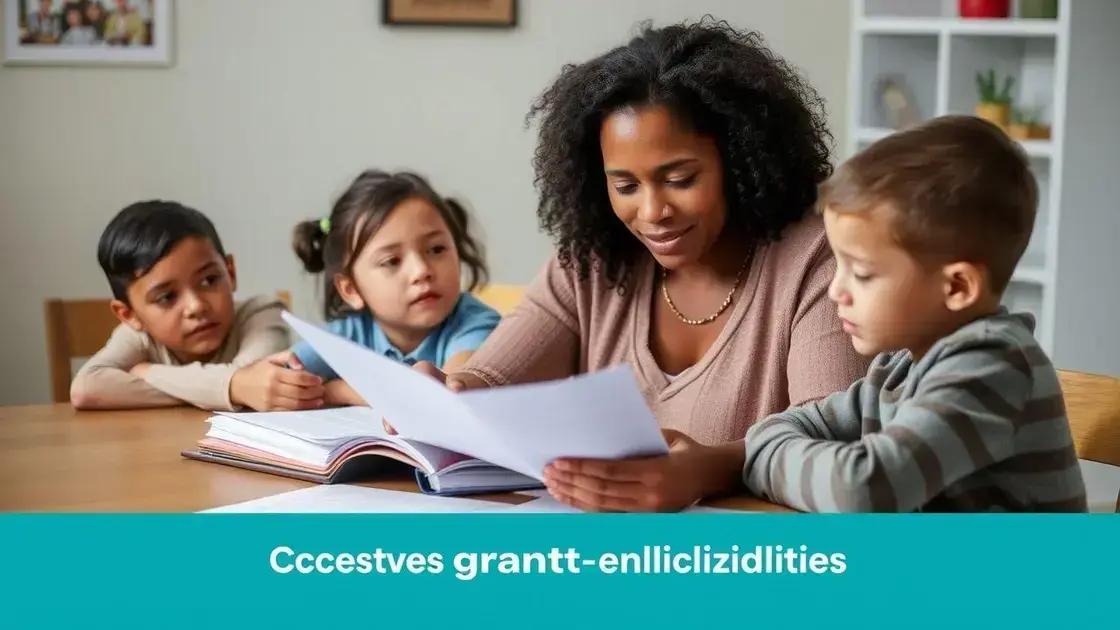
Understanding the eligibility criteria for grants for single mothers is key to securing financial support. Different grants may have varying requirements, but there are common factors that many of them share.
Income Level
Most grants require applicants to demonstrate a specific income level. Typically, your income must fall below a certain threshold to qualify. This criterion ensures that funds are allocated to those who need assistance the most.
Residency Status
Many grants are limited to residents of a particular state or region. It’s important to verify residency requirements because some grants only cater to specific local communities. Check if you need to provide proof of residency along with your application.
Age and Parental Status
Eligibility can also depend on your age and parental status. Generally, grants aimed at assisting single mothers require that you are a biological or adoptive parent. Some programs may have age restrictions, particularly those focused on students.
- Verify if you meet the parental status earlier.
- Understand if there are age limits for application.
- Ensure you can provide documentation as needed.
Education level might also be a factor for some educational grants. If applying for funding for school, ensure you meet any educational prerequisites. Lastly, some grants might require community involvement or participation in certain programs. Engaging with your community can also open up more funding opportunities.
Getting clear on these eligibility criteria will set you on the right path as you seek financial assistance as a single mother. Always read the specific requirements for each grant carefully to ensure you have everything needed for a successful application.
Tips for maximizing your grant application
Maximizing your grant application is essential to increase your chances of approval. Utilizing a few effective tips can help make your application stand out from the rest.
Understand the Guidelines
Before you begin, make sure you thoroughly read the grant guidelines. Each grant has specific requirements, including the type of information you should include. Ensuring you understand these criteria can save you time and prevent mistakes.
Tailor Your Application
Personalizing your application is crucial. Address the goals of the grant and explain how your situation aligns with them. Clearly detail how receiving the grant will positively impact your life as a single mother.
Provide Clear and Concise Information
While it’s important to share your story, clarity is key. Use direct language and avoid unnecessary jargon. Make your points quickly and back them up with relevant facts or statistics. This approach can keep the reviewers engaged.
- Use bullet points for key information.
- Keep paragraphs short and focused.
- Avoid repeating the same points.
Additionally, be sure to follow formatting guidelines. If a grant specifies a certain font size or length, adhere to these details closely. Ignoring these can reflect poorly on your application.
Ask someone to review your application before submission. Feedback from others can provide valuable insights and help catch any errors. Fresh eyes may notice things you’ve missed or suggest improvements.
Finally, be sure to submit your application early. This gives you time to address any potential issues and reduces last-minute stress. Completing your grant application well before the deadline can be one of the best strategies for success.
Success stories of single mothers who received grants
Success stories of single mothers who have received grants can serve as powerful testimonies to inspire others. These real-life experiences highlight how financial assistance can create meaningful change.
Story of Maria
Maria, a single mother of two, faced numerous challenges after her divorce. With limited income, she struggled to provide for her children while pursuing her own education. After discovering a grant aimed at single mothers returning to school, she applied and received funding. This grant enabled her to enroll in a nursing program, which will hopefully lead to a stable career and a better life for her family.
Story of Sarah
Another inspiring case is Sarah, who used a grant to start her own home-based bakery. After losing her job, she decided to turn her passion for baking into a business. With financial support from a small business grant, Sarah was able to purchase supplies and set up her kitchen. Now, she not only supports her family but also finds joy in her work.
Story of Emily
Emily’s journey reflects resilience and determination. As a single mother, she applied for a grant to cover childcare costs while she worked on her degree. This funding allowed her to attend classes full-time while ensuring her children were well cared for. Today, Emily is proud to be graduating and hopes to inspire other mothers to pursue their dreams.
- Research grants that fit your situation.
- Connect with other women for support and motivation.
- Celebrate small wins along the way.
Each of these women faced their unique struggles, but they found hope through grants that opened doors to new opportunities. By sharing their stories, they demonstrate the potential that grants hold for single mothers seeking to improve their lives.
FAQ – Frequently Asked Questions about Grants for Single Mothers
What types of grants are available for single mothers?
There are many types of grants, including federal, state, and community-based grants specifically designed to support single mothers in education, housing, and business.
How can I apply for grants as a single mother?
To apply for grants, research available programs, prepare the necessary documentation, and follow the application steps carefully, ensuring your submission aligns with the guidelines.
What are the eligibility criteria for receiving grants?
Eligibility criteria can vary, but generally include income level, residency status, and parental status as a single mother.
How can I maximize my chances of getting a grant?
To enhance your chances, understand the guidelines, tailor your application, provide clear information, and seek feedback from others before submission.