Housing support for low-income families provides essential assistance through various programs, including public housing and Section 8 vouchers, helping to improve stability, financial security, and overall quality of life.
Housing support for low-income families is crucial for ensuring stability and a sense of community. Many families often wonder what options might be available to them, and how these programs can genuinely make a difference in their lives. Let’s explore the various avenues you can take to secure this vital support.
Understanding housing support programs
Understanding housing support programs is essential for anyone looking to improve their living situation. These programs play a critical role in helping families secure safe and affordable housing. Many people are unaware of the various options available to them and how to navigate the application processes.
Types of housing support programs
There are several types of housing support programs that cater to different needs. These include government-funded initiatives, nonprofit organizations, and local community resources. Each program has specific eligibility criteria and benefits designed to assist families in need.
- Public housing programs offer affordable rental units managed by local housing authorities.
- Housing choice vouchers, also known as Section 8, provide financial assistance to help low-income families pay their rent in the private market.
- Transitional housing programs assist families who may be experiencing homelessness, offering temporary housing while they work toward permanent solutions.
- Nonprofit and community organizations often provide financial aid, grants, or counseling services to assist families with housing needs.
Understanding the distinctions between these programs can help families make informed decisions about where to seek the most appropriate assistance. For instance, while public housing may offer lower rents, the application process can be lengthy and competitive.
Navigating the application process
The application process for housing support programs can vary significantly, often requiring specific documentation and proof of income. Many applicants feel overwhelmed, but breaking the process down into manageable steps can help.
To start, families should gather necessary documents, such as proof of income, identification, and any previous rental history. Filling out applications thoroughly and accurately is crucial, as incomplete forms can lead to delays or denials.
Additionally, seeking assistance from local organizations or housing advocates can guide families in understanding their options. These resources are often familiar with available programs and can help navigate complex applications.
With a clear understanding of housing support programs and a strategic approach to applications, families can uncover valuable resources that lead to housing stability and security.
Eligibility criteria for assistance
Understanding the eligibility criteria for assistance is essential for accessing housing support. Each program has its own set of requirements that applicants must meet to qualify. These criteria can vary based on factors like income, family size, and residency status.
Income requirements
Most housing support programs require applicants to demonstrate financial need. This often means having an income that falls below a certain threshold, which is typically a percentage of the median income for the area. Income limits can vary significantly based on the location and the size of the household.
- Applicants may need to provide documentation such as pay stubs, tax returns, or bank statements to prove their income.
- The specific income limits for eligibility can often be found on the website of local housing authorities.
- Some programs also consider assets owned by the family, which could impact eligibility.
In addition to income, many housing support programs also consider family size. Larger families may qualify for more assistance due to their increased need for space and resources.
Residency status
Another important eligibility factor is residency. Most housing support programs require applicants to be legal residents of the area where they are applying. This ensures that assistance goes to those who are most affected by local housing challenges.
Applicants may need to provide proof of residency, such as a utility bill, lease agreement, or official identification. Additionally, non-citizens may have different eligibility requirements depending on the program.
For some programs, priority is given to applicants who are experiencing homelessness or are currently living in unsafe conditions. Understanding these criteria can help families assess their situation and determine the best options for applying for assistance.
Overall, being aware of the eligibility criteria for assistance is a crucial step toward securing housing support. Families are encouraged to gather necessary documentation and reach out to local housing authorities to clarify requirements and understand their options better.
Types of housing support available
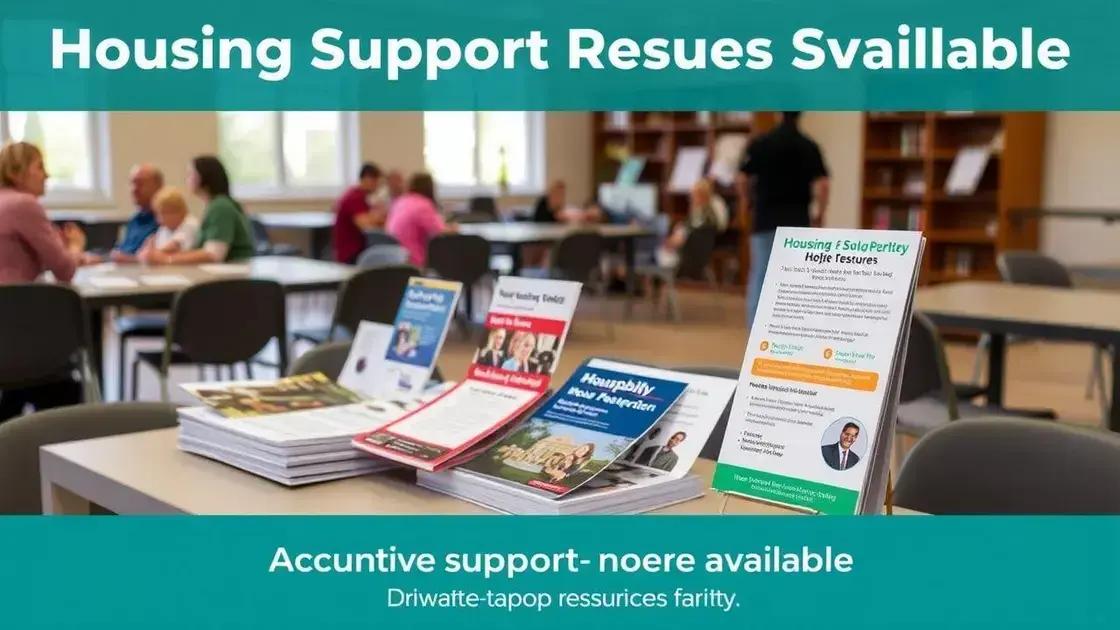
There are various types of housing support available to assist low-income families in securing safe and affordable housing. Understanding these options is vital for those in need of assistance. Each type of support serves different purposes and varies in terms of eligibility and application processes.
Government programs
Government-sponsored housing programs are designed to provide financial help and resources for families. These programs often include:
- Public housing: Managed by local housing authorities, these programs offer subsidized rental units at affordable rates.
- Section 8 vouchers: This program gives families the option to rent in the private market with rental assistance.
- Homeownership programs: Some government initiatives aim to help families purchase homes through subsidies and reduced-interest loans.
Each program has specific requirements, and families should check eligibility criteria carefully.
Community-based support
Many local nonprofit organizations also offer housing support. These programs often provide essential services like financial assistance, counseling, and education. Community support programs may include:
- Transitional housing: This offers temporary housing to families while they stabilize their situations.
- Emergency shelter: These shelters provide short-term housing for individuals and families in crisis.
- Housing counseling: Many organizations offer counseling to help families understand their options and navigate the housing market.
Community-based support can be invaluable, especially for those facing immediate housing crises.
In addition to these, there are also state and local initiatives that vary by area. It’s important for families to explore all their options and reach out to local housing agencies or community organizations to discover the best type of housing support for their specific needs. By understanding the variety of available resources, families can make informed decisions about their housing situations.
How to apply for housing support
Applying for housing support can seem overwhelming, but understanding the steps can make the process smoother. Families in need should take the time to gather necessary documents and familiarize themselves with the application requirements to improve their chances of receiving assistance.
Gathering necessary documents
The first step in the application process is to collect all relevant documents. This may include:
- Proof of income: Pay stubs, tax returns, or bank statements can help demonstrate your financial situation.
- Identification: Valid government-issued IDs for all adult applicants are often required.
- Rental history: Information about your previous rentals, including lease agreements, may be needed.
- Family composition: Documentation showing family members living in your household can also be required.
Having these documents ready can streamline the application and reduce delays.
Understanding application processes
Next, families need to understand where and how to apply for housing support. Many local housing authorities or community organizations offer application forms online. Here are some steps to follow:
- Visit the website of your local housing authority to access applications and guidelines.
- Fill out the application accurately, providing as much detail as possible to support your case.
- Submit any required documentation along with your application.
It’s important to meet any deadlines and follow up if you do not hear back within a reasonable time frame.
Many organizations also offer assistance filling out applications, so don’t hesitate to ask for help. Seeking support from community organizations can help ensure that you meet all criteria and submit a complete application.
Staying organized and proactive during the application process can make a significant difference. Families should be patient, as the waiting period for responses to housing support applications can sometimes take longer than expected. Understanding the process and maintaining documentation will better equip families for this important step toward securing housing.
Impact of housing support on families
The impact of housing support on families is profound and can change lives significantly. Access to stable housing greatly enhances a family’s quality of life and provides a solid foundation for growth and development.
Improved stability
One of the most immediate effects of housing support is improved stability. Families who receive assistance can move into safe and secure living environments. This stability allows children to attend the same schools, fostering better educational outcomes and social connections.
- Stable housing reduces the stress of frequent moves.
- Children benefit from consistent schooling.
- Families can build relationships within their communities.
This sense of belonging can enhance a family’s overall well-being.
Enhanced financial security
Another important aspect of housing support is its contribution to enhanced financial security. By alleviating the burden of high housing costs, families can allocate their resources more effectively. This might include:
- Investing in education and job training.
- Building savings for emergencies.
- Affording basic needs like food and healthcare.
With less financial strain, families are better equipped to pursue long-term goals.
Additionally, having reliable housing can decrease health risks associated with homelessness and unsafe living conditions. Families with stable homes are less likely to experience health issues, which in turn reduces healthcare costs and lost wages.
Understanding the impact of housing support on families emphasizes the importance of such programs in building stronger communities. When families feel secure in their homes, they can focus on growing, thriving, and contributing positively to society.
FAQ – Questions About Housing Support for Low-Income Families
What is housing support?
Housing support refers to various programs and services designed to assist low-income families in securing safe and affordable housing.
Who is eligible for housing support?
Eligibility for housing support typically depends on income, family size, and residency status. Each program has specific criteria.
What types of housing support are available?
Types of housing support include public housing, Section 8 vouchers, transitional housing, and assistance from local nonprofit organizations.
How can families apply for housing support?
Families can apply for housing support by gathering necessary documents, completing applications from local housing authorities or community organizations, and submitting their forms with required documentation.