The key moments from the presidential debate significantly influence voter sentiment and strategy, affecting public perception and support for candidates leading up to the election.
In the recent presidential debate, key moments from presidential debate highlighted the candidates’ contrasting views and strategies. Curious to see what stood out?
Top quotes that shaped the debate
The top quotes that shaped the debate provide critical insights into the candidates’ positions and the tone of the election. They often resonate with voters, shaping opinions and directing discussions. These moments reveal not just individual messages but also highlight the overall atmosphere of the debate.
Memorable Highlights
During the debate, several quotes stood out. These remarks drew attention to key issues and showcased each candidate’s ability to communicate effectively under pressure. A compelling quote can linger in the minds of viewers long after the debate has ended.
Quotes That Made an Impact
- “We must unite for a better future.” This statement encapsulated the need for collaboration.
- “Our time for change is now!” Highlighting urgency can motivate voters.
- “Together, we can achieve great things.” This phrase emphasizes collective effort and optimism.
- “Leadership is about service.” Reminding voters of accountability is powerful.
Additionally, hearing candidates’ contrasting viewpoints through their own words clarifies their platforms. The communication style, tone, and emotion also shape how voters interpret their messages. For instance, passionate declarations can engage the audience more than dry statistics. When a candidate speaks from the heart, it resonates deeply.
As the debate progressed, viewers were drawn into the drama of the exchanges. Each memorable quotation presented a chance for candidates to project their ideals or to challenge their opponents directly. This dynamic keeps voters engaged and can shift public perception swiftly.
In summary, the top quotes not only reflect personal beliefs but also help to define the election landscape. They serve as moments of clarity in a complex political dialogue. The impact of what candidates say, and how they say it, cannot be overstated.
Key policies discussed
Understanding the key policies discussed during the presidential debate is essential for voters. These policies shape the candidates’ platforms and influence public opinion. Each candidate aimed to communicate their vision clearly, allowing viewers to grasp where they stand on critical issues.
Major Policy Areas
Throughout the debate, candidates covered several vital topics, presenting straightforward summaries to clarify their positions. Addressing issues like healthcare, education, and the economy, each candidate brought forward policies that resonate with voters’ needs.
Healthcare Initiatives
- Universal healthcare: Some candidates advocated for a system that ensures everyone has access to medical services.
- Prescription drug pricing: Proposals to lower the costs of medications were highlighted prominently.
- Healthcare workforce: Enhancing training programs for nurses and doctors was discussed as a means to improve service delivery.
- Telehealth expansion: Promoting remote healthcare services gained attention during critical discussions.
Shifting to education, candidates expressed differing approaches to funding and quality. They discussed the significance of improving public schools while making higher education more affordable. By emphasizing these policies, candidates aimed to show commitment to the future of American youth. As debate participants articulated their educational plans, it became evident how they plan to address challenges faced by the system.
Another focal point was the economy, where candidates outlined measures to stimulate growth and create jobs. Each proposed their strategies for handling inflation, trade, and infrastructure development, showcasing their economic philosophies. It’s fascinating how candidate responses to economic questions varied widely. The debate allowed for a clear comparison of contrasting economic theories, which could shape voters’ choices.
Within this dialogue about key policies, the candidates’ ability to engage with questions and provide coherent answers also played a role in how voters perceived their capabilities. The clarity of each proposal influenced voter confidence and willingness to support a candidate’s vision for the future.
Candidates’ performances compared
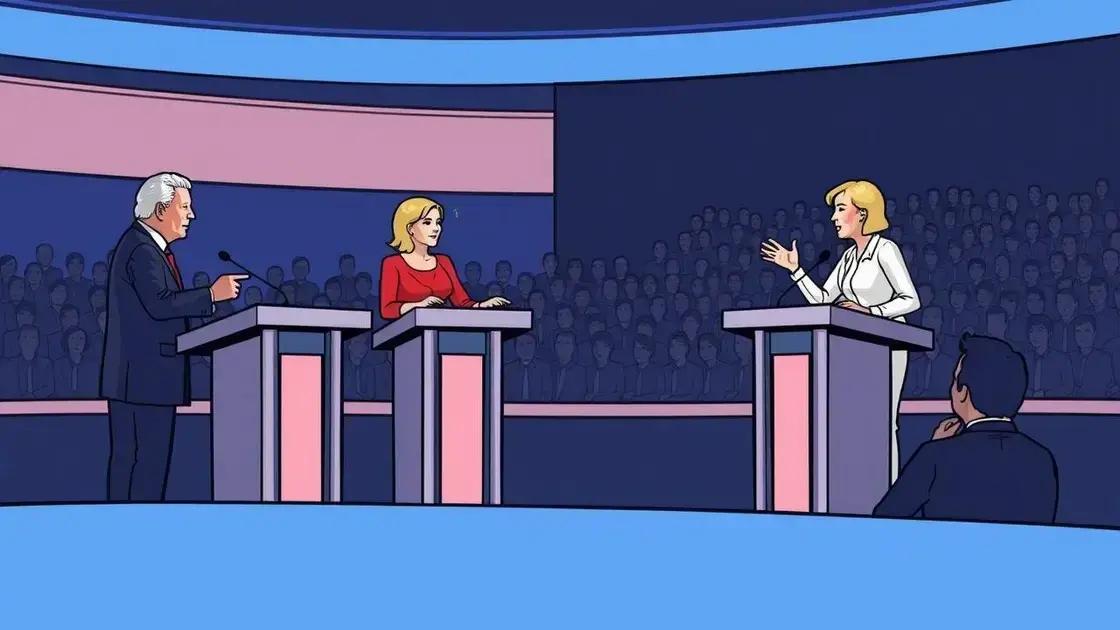
Comparing the candidates’ performances during the debate offers voters insight into their capabilities and styles. Each candidate showcased their strengths and weaknesses through their responses and body language. Observing these aspects can help voters determine who aligns best with their values.
Engagement Level
Throughout the debate, engagement was key. Candidates who maintained eye contact and used gestures effectively often seemed more connected to the audience. This connection can lead to a stronger impact. Candidates who stood confidently and addressed their opponents directly appeared more dominant.
Response Clarity
Another area to consider is how clearly candidates communicated their messages. Some excelled at providing concise answers, while others tended to ramble. Effective communication can make complex issues seem straightforward, which is essential in reaching undecided voters.
- Direct answers: Candidates who answered questions succinctly left a lasting impression.
- Articulation: Clear speech patterns made their points more effective.
- Relevance: Staying on topic helped maintain credibility with viewers.
- Passion: Enthusiasm can ignite interest among those listening.
Body language is also a significant part of a candidate’s performance. Confident gestures, such as open hands and forward lean, can convey enthusiasm and optimism. At the same time, defensive postures can signal uncertainty or avoidance. Voters notice these non-verbal cues, which can alter perceptions.
Additionally, how candidates handled interruptions and rebuttals played a crucial role. Those who remained composed under pressure demonstrated strong leadership qualities. It was interesting to see how they countered attacks from opponents, as their responses can reveal their readiness for the challenges of office.
Furthermore, the ability to connect with the audience through personal anecdotes helped some candidates stand out. Stories can make issues relatable, drawing voters in further. Recognizing the balance between facts and storytelling shows an understanding of effective persuasion.
Voter reactions and interpretations
Examining voter reactions and interpretations regarding the presidential debate provides insight into how the public perceives each candidate. These reactions can vary widely, influenced by personal beliefs, values, and the candidates’ presentations.
Immediate Reactions
As the debate unfolded, social media platforms buzzed with instant reactions. Many voters took to Twitter and Facebook to share their thoughts. Some praised candidates for their points, while others criticized them for their responses. This real-time feedback is vital as it reflects public sentiment.
Emotional Responses
Emotions play a crucial role in how voters interpret debate performances. Candidates who evoke strong feelings, whether anger, joy, or hope, often leave lasting impressions. When a candidate connects on an emotional level, it can significantly shift perceptions.
- Empathy: Candidates showing understanding resonate well with voters.
- Frustration: Expressing frustrations about issues can rally voters who feel the same.
- Hope: Candidates who inspire hope often attract support from undecided voters.
- Fear: Fear tactics can lead to polarized reactions, causing some voters to withdraw support.
Furthermore, traditional media analysis also shapes voter interpretations. News outlets often summarize debates, highlighting key moments and quotes. These summaries can influence how voters feel about the candidates. If a news network focuses on a candidate’s strong point, it may sway public opinion positively. Conversely, highlighting a misstep can define a candidate’s image negatively.
Focus groups further elaborate on voter perceptions. Post-debate discussions often reveal nuanced interpretations of candidates’ statements and behaviors. Participants share personal experiences and values, helping to contextualize their reactions. This information is essential for campaigns, as it provides insight into what resonates with potential voters.
Polls conducted following the debate also give a clear picture of voter sentiment. Quick surveys reveal shifts in support and opinions, allowing for immediate assessment of the debate’s impact. When comparing pre-debate and post-debate polls, campaigns can identify which messages stuck and which did not.
Implications for the upcoming election
The implications for the upcoming election stemming from the recent presidential debate are significant. Candidates laid out their platforms clearly, impacting how voters view their chances. Public opinion shifts may determine the final outcome as the election approaches.
Shifting Voter Sentiment
After the debate, polls indicated varying levels of support for each candidate. These changes reflect how voters respond to specific issues raised. A candidate who articulates their vision convincingly can attract undecided voters, boosting their campaign.
Messaging Strategies
The debate also highlighted the importance of effective messaging. Candidates who masterfully conveyed their ideas could connect with the audience better, influencing public perception. Campaign strategies may shift as teams analyze debate performances.
- Targeted outreach: Candidates might focus on key demographics based on debate responses.
- Refinement of platforms: Information gathered can help candidates readjust their policies to resonate with voters.
- Debate highlights: Using memorable quotes in ads can help keep a candidate’s message alive.
- Addressing weaknesses: Candidates may need to improve areas where they performed poorly.
Moreover, the candidates’ performances set the tone for the rest of the campaign. Strong emotions expressed during the debate can drive narratives. Those who effectively use their debate moments to build momentum will likely benefit the most.
Another implication is how candidates engage with the media post-debate. Effective communication with reporters can help maintain a positive image. By addressing issues directly, they can clarify any misunderstandings from the debate.
As election day approaches, every debate detail becomes crucial. Candidates will strive to keep the conversation focused on their strengths and avoid pitfalls. The landscape is ever-changing, influenced by voter reactions, media coverage, and strategic adjustments.
The recent presidential debate has highlighted several important factors that will impact the upcoming election. Candidates uniquely presented their platforms, resonating with different voter groups. Viewers’ reactions and interpretations significantly shape voter sentiment as election day approaches. This debate serves not just as a competition of ideas but also as a critical moment for candidates to connect with the electorate. Overall, the implications of this debate on strategies and voter behavior will play a crucial role in determining the electoral outcome.
FAQ – Frequently Asked Questions about the Presidential Debate
What were the key themes raised in the debate?
The debate focused on essential themes such as healthcare, education, and economic policies, highlighting candidates’ differing perspectives.
How do voter reactions impact election outcomes?
Voter reactions following the debate can shift public opinion, influencing support levels for candidates leading up to the election.
Why is media coverage important after the debate?
Media coverage can shape voter interpretations of candidates’ performances, highlighting key moments that resonate with the public.
What strategies might candidates adopt after the debate?
Candidates may refine their messaging and outreach strategies based on feedback and polling data observed after the debate.
