Roe v. Wade is a landmark Supreme Court decision that legalized abortion in the U.S., significantly impacting reproductive rights by affirming a woman’s right to choose and setting crucial legal precedents.
The Roe v. Wade legal status is a crucial topic in today’s conversation about reproductive rights. This landmark case shaped the legal landscape, but what does its current status mean for us? Let’s dive into its implications.
Historical background of Roe v. Wade
The historical background of Roe v. Wade is essential to understanding the legal and social context of abortion rights in the United States. The case began in 1970 when a woman named Norma McCorvey, known by the legal pseudonym “Jane Roe,” challenged Texas laws prohibiting abortion, arguing that they violated her constitutional right to privacy.
In 1973, the Supreme Court delivered a landmark decision in favor of Roe, ruling that a woman has the constitutional right to choose to have an abortion under the right to privacy. This case not only changed laws but also sparked a nationwide debate on reproductive rights.
Key Events Leading to the Case
Several pivotal events set the stage for this historic decision. The feminist movement during the 1960s demanded equal rights for women, including control over their own bodies. Meanwhile, the changing social attitudes towards sexuality and reproduction played a crucial role in shaping public opinion.
- The establishment of birth control access in the 1960s
- The emergence of significant court cases like Griswold v. Connecticut
- Increased activism from women’s rights groups
These events contributed to growing momentum for change. They highlighted the need for legal protection of women’s rights, shaping the arguments that would eventually reach the Supreme Court.
As the case unfolded, it reflected broader societal changes and a clash of values around sex, family, and morality. The ruling set a precedent that extended beyond abortion, impacting various aspects of privacy rights and personal freedoms in American life.
Impact of the Ruling
The decision in Roe v. Wade had immediate and far-reaching implications. It not only secured abortion rights but also galvanized movements both for and against reproductive rights.
- Pro-choice advocates celebrated the victory for women’s autonomy.
- Pro-life supporters viewed it as a critical challenge to their beliefs about the sanctity of life.
- The ruling influenced subsequent legislation and court cases related to reproductive health.
Over the years, Roe v. Wade has remained a touchstone in the ongoing debate about a woman’s right to choose, showing that the discussion is far from settled. Understanding its historical background is vital for grasping the complexities of reproductive rights today.
Major legal battles following Roe v. Wade
Following the landmark decision in Roe v. Wade, several major legal battles have shaped the landscape of reproductive rights in the United States. The ruling set a precedent, but it also opened the door for ongoing conflicts around abortion laws, leading to significant court cases that challenged and clarified what the ruling meant for women and their rights.
One of the earliest and most significant cases was Planned Parenthood v. Casey in 1992. This case reaffirmed the core holding of Roe but also allowed states to impose some restrictions on abortions, as long as they did not place an “undue burden” on women. This created a new standard for evaluating state abortion laws.
Key Legal Battles
In addition to Planned Parenthood v. Casey, other legal battles followed, often reflecting changing political climates and public sentiments:
- Whole Woman’s Health v. Hellerstedt (2016): This case challenged Texas laws that imposed strict regulations on abortion clinics, ruling that these regulations placed an unnecessary burden on women.
- June Medical Services v. Russo (2020): This case further solidified the precedents set by Whole Woman’s Health, striking down a Louisiana law that restricted access to abortion services.
- Dobbs v. Jackson Women’s Health Organization (2022): This case questioned the constitutionality of a Mississippi law that banned most abortions after 15 weeks. The ruling could have significant implications for Roe, reflecting the ongoing tension around abortion rights.
These legal battles reveal the turbulent nature of abortion rights post-Roe. They illustrate how courts have played a critical role in interpreting the limits and protections of reproductive rights. As the dialogue around abortion continues to evolve, these cases highlight the fragility of Roe v. Wade as a legal foundation.
While some states reacted to the rulings by trying to implement more restrictive laws, others expanded access to abortion services, leading to a patchwork legal landscape across the country. This dynamic continues to influence the legislative environment regarding reproductive healthcare.
Impact of Roe v. Wade on reproductive rights
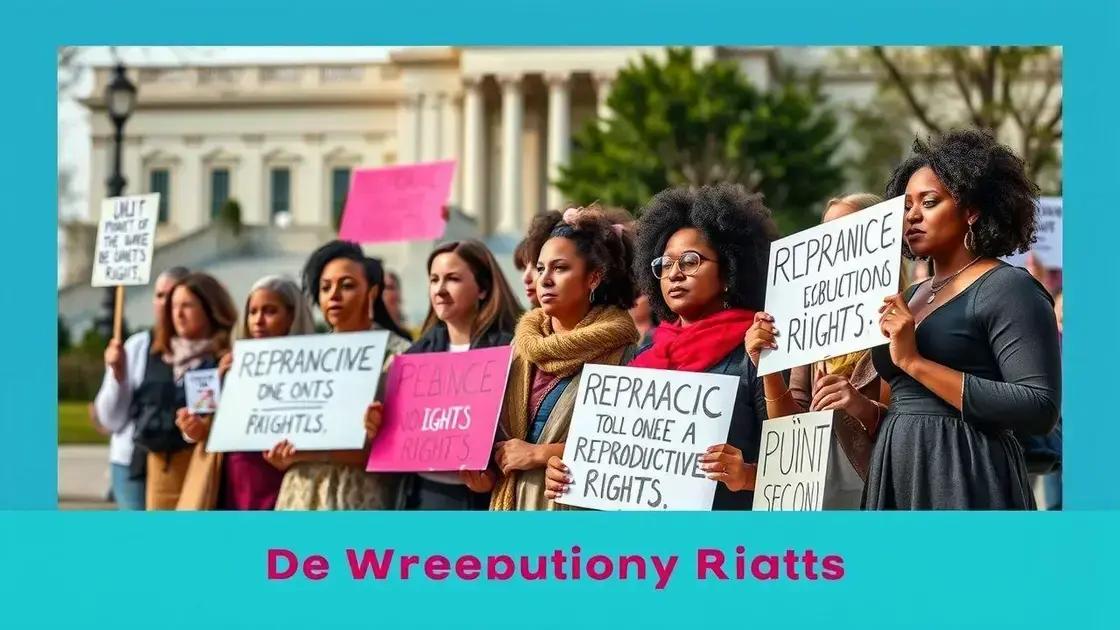
The impact of Roe v. Wade on reproductive rights has been profound and multifaceted. Since the Supreme Court decision in 1973, abortion rights have become a central issue in American politics. This ruling not only established a woman’s right to choose but also catalyzed a broader conversation about gender equality and personal freedoms.
One of the key outcomes of Roe v. Wade was the way it empowered women to make choices about their own bodies. For many, this was not just about abortion, but about taking control over their reproductive health. The decision paved the way for access to contraception and family planning services, fundamentally changing women’s healthcare options.
Legal Precedents and Their Importance
Roe v. Wade created legal precedents that influence various aspects of reproductive rights:
- Affirmation of privacy rights: The ruling underscored a woman’s right to privacy under the Constitution, which has been cited in many subsequent cases.
- Access to healthcare services: The decision emphasized the need for safe and legal abortion services, impacting healthcare policies and practices.
- Women’s rights movements: Roe’s affirmation of reproductive choice energized feminist movements, leading to increased advocacy for women’s rights.
Even decades later, the ruling continues to drive discussions about women’s autonomy. It has been referenced in numerous court cases, shaping laws and regulations across the nation. As states pass varying abortion laws, the implications of Roe v. Wade remain significant.
As political climates shift, the impact of Roe v. Wade also influences public opinion. Many view it as a measure of progress toward gender equality. However, ongoing debates demonstrate that the issue remains contentious, and the very right established in 1973 faces challenges and attempts to be rolled back.
This complex legacy underscores the importance of Roe v. Wade in contemporary society. The discussions foster a dialogue on women’s health, rights, and choices, reminding us that the journey for reproductive rights is far from over.
Current legal challenges and developments
The current legal challenges and developments surrounding reproductive rights continue to shape the landscape of abortion access in the U.S. Recent years have seen a surge in state-level legislation that aims to restrict access to abortion, directly challenging the precedents set by Roe v. Wade.
Many states have enacted laws that seek to limit when and how abortions can be performed. These legal changes have sparked numerous court cases as advocates fight to protect the rights established in Roe. The legal battles typically center on the definitions of what constitutes an “undue burden” on a woman’s right to choose.
Notable Legal Challenges
Several significant cases have emerged that could redefine abortion access:
- Dobbs v. Jackson Women’s Health Organization: This case, set to challenge Mississippi’s law banning most abortions after 15 weeks, could fundamentally alter the legal framework established by Roe v. Wade.
- Texas Heartbeat Act: Enacted in 2021, this law prohibits abortions once a fetal heartbeat is detected, usually around six weeks, leading to legal disputes over its constitutionality.
- Arizona Abortion Laws: Recent legal arguments have focused on Arizona’s restrictions, which have raised questions about the accessibility of abortion services.
These cases highlight the ongoing tension between state regulations and federal protections for reproductive rights. Each challenge reflects broader societal debates about women’s rights and healthcare access.
As public opinion continues to evolve, state legislatures are increasingly testing new limits on abortion access. Some states are becoming more restrictive, while others aim to protect or expand reproductive rights. The resulting patchwork of laws across the country complicates women’s access to abortion services, making the landscape more unpredictable.
One of the likely outcomes of these legal challenges is increased attention from the U.S. Supreme Court. As cases make their way through the legal system, all eyes are on how the Court will respond to this second wave of challenges to long-established rights.
Future of Roe v. Wade in the U.S.
The future of Roe v. Wade in the U.S. remains uncertain and highly debated. As legal challenges continue to rise, the ruling faces potential re-evaluation by the courts. Many states are actively seeking ways to either bolster or dismantle the rights established by this landmark decision from 1973.
In recent years, various Supreme Court cases have prompted discussions about the future of abortion rights. Each new case presents an opportunity for the Court to change or uphold precedents. As public opinion shapes legal frameworks, the future status of abortion rights will likely depend on the makeup of the Supreme Court and prevailing social attitudes.
Potential Scenarios
There are several ways the future could unfold regarding Roe v. Wade:
- Upholding Roe: The Court could reinforce its commitment to Roe v. Wade, ensuring that access to safe and legal abortions remains protected nationwide.
- Partial Rollbacks: Some justices may support decisions that allow for more restrictions on abortion while keeping Roe intact, leading to a patchwork approach across states.
- Overturning Roe: The most significant shift would come if the Supreme Court decides to overturn Roe v. Wade entirely, allowing states to set their abortion laws, potentially leading to severe restrictions or bans.
The repercussions of any of these scenarios would be substantial. If Roe is overturned, it could empower states to impose strict anti-abortion laws, which has already been seen in some states. This would likely lead to further legal battles as organizations challenge those laws in court.
As this debate continues, the voices of activists and the general public will remain crucial. The future will also depend on how advocacy groups mobilize for reproductive rights and the extent of their influence on lawmakers. Continued dialogue around women’s rights and healthcare access is essential to shaping the future landscape of reproductive freedom in the U.S.
FAQ – Frequently Asked Questions about Roe v. Wade and Reproductive Rights
What is Roe v. Wade?
Roe v. Wade is a landmark Supreme Court decision from 1973 that legalized abortion nationwide, affirming a woman’s right to choose.
How has Roe v. Wade impacted reproductive rights?
The ruling established important precedents for women’s autonomy and access to healthcare, shaping the legal framework for reproductive rights in the U.S.
What current legal challenges are affecting Roe v. Wade?
Many states are enacting laws that challenge or restrict abortion access, leading to ongoing court cases that may impact the future of Roe v. Wade.
What can individuals do to support reproductive rights?
Individuals can advocate for reproductive rights by staying informed, volunteering with organizations, participating in demonstrations, and voting for supportive policies.